Impeachment is a relief, but not something to celebrate
A reflection on the political unrest in South Korea, the historical context of martial law, and the impact of presidential impeachment on democratic institutions.
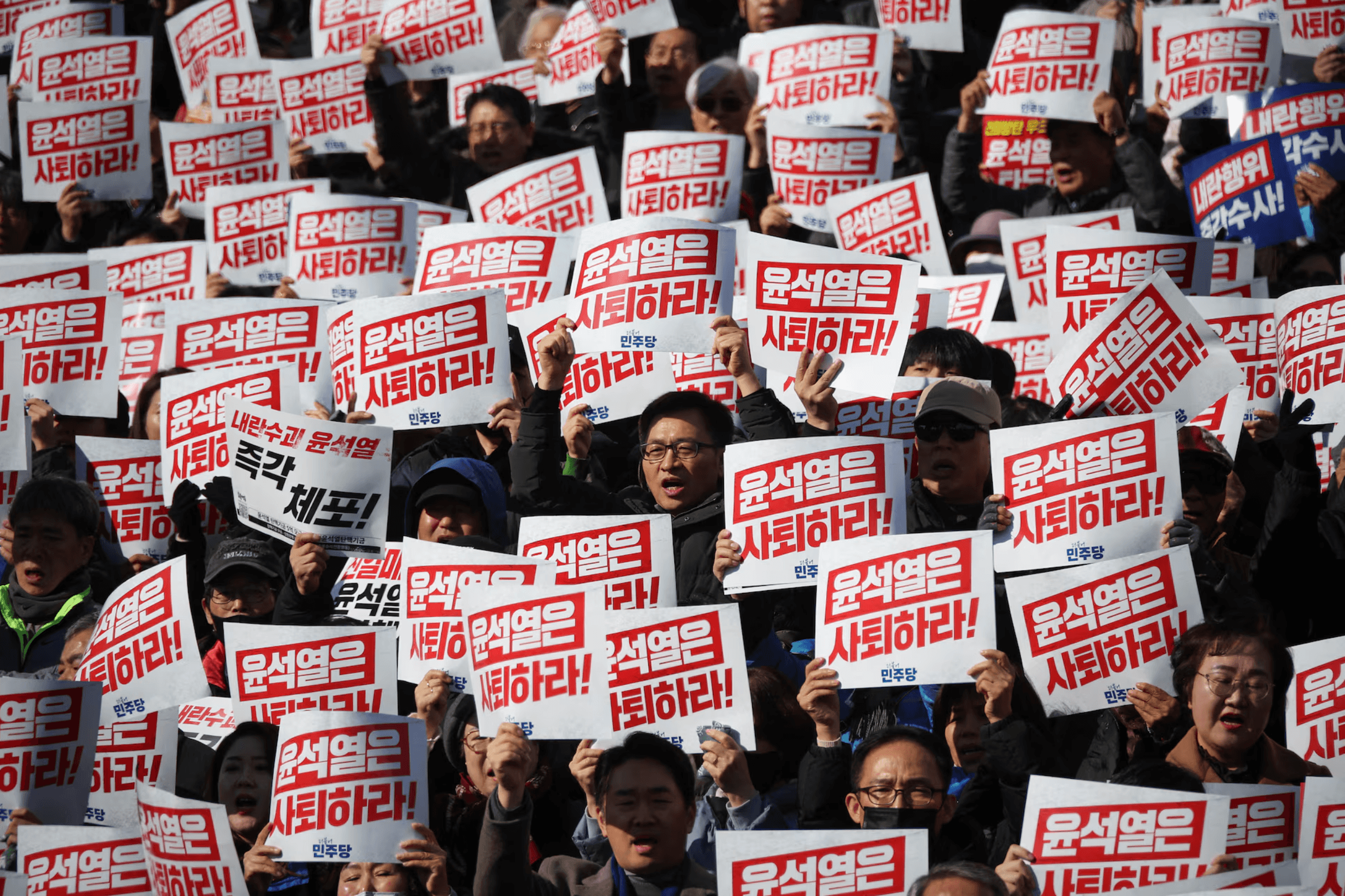
As M27s spend the semester in Seoul, it has been impossible to ignore the wave of political unrest around us. Protests have been a regular scene on the streets since December 2024. If you have struggled to put together what has been happening and why people on all sides are so angry, here is our attempt at summarizing what has been going on.
Disclaimer: We encourage all Minervans to read local news, talk to people in the rotation city, and seek out Korean sources to better understand the context behind events. This article offers background and reflection, but it is not a substitute for doing your own research.
Key Definitions
- Martial Law: The replacement of civilian government by military rule and the suspension of civilian legal processes for military powers.
- Impeachment: Legal action to remove a sitting president. It is the way for the legislative branch in presidential democracies to protect the country from presidential misbehavior. In South Korea, two-thirds of the members of the National Assembly must support the impeachment.
A Bit of Context: How We Got Here
On Friday, April 4th, South Koreans received the news that the Constitutional Court ruled to uphold the impeachment of Yoon Suk Yeol. This followed the National Assembly's enactment of impeachment shortly after Yoon declared martial law in December of the previous year.
Timeline of South Korean Democracy
| Year | Event |
|---|---|
| 1950-1953 | Korean War ended with the peninsula divided. |
| 1961 | Park Chung-hee came to power through a military coup. |
| 1972 | Yushin Constitution: Park rewrote the constitution for near-full control. |
| 1979 | Park Chung-hee was assassinated by his intelligence chief. |
| 1980 | Chun Doo-hwan seized power, establishing a military dictatorship. |
| 1980 | Gwangju Uprising: Citizens protesting martial law were violently suppressed. |
| 1987 | June Democracy Protests: Resulted in the first direct presidential elections. |
| 2004 | President Roh was impeached but later reinstated by the Constitutional Court. |
| 2012 | Park Geun-hye was elected as the first female president of South Korea. |
| 2016 | Candlelight Protests: 16 million people protested corruption; Park was impeached. |
| 2022 | Yoon Suk Yeol became president. |
| Dec 3, 2024 | Yoon declared Martial Law at 10 pm KST. |
| Dec 4, 2024 | The National Assembly voted to lift the martial law. |
| Dec 14, 2024 | Yoon was voted to be impeached by the National Assembly. |
| April 4, 2025 | Impeachment was upheld by the Constitutional Court. |
The Current Crisis
Yoon’s declaration of martial law was the 17th in the country’s history. He explained the necessity by claiming the opposition-controlled parliament was paralyzing his administration and framed the move as a defense against "pro-North Korean elements." Critics, however, called this "red-baiting," an old authoritarian tactic used to silence the masses.
The removal of Yoon marks the third impeachment process since the start of the century. While 204 of 300 parliament members voted for the impeachment, including 12 from his own party, the nation remains deeply divided.
Student Reflections: "Impeachment is a relief, but not something to celebrate"
We asked four Korean Minervans to reflect on this moment.
Lim
"The need to impeach a president again suggests the fragility of democratic institutions. Instead of viewing this as a moment of democratic triumph, it should be an opportunity to reflect on broader issues: voter behavior, party dynamics, and the need for institutional reform."
Seo
"Are we thinking enough to deserve democracy? More than this, we need to be aware of whether demos (people) are ready to get Kratia (power)."
Park
"Now is not a time for slogans or confetti. It is a time to reflect. When the most powerful office in the country becomes a revolving door, spun not by elections but by tribunals, it signals a deeper malaise. Impeachment, by nature, does not heal, it splits."
Lee
"There is much to celebrate... To witness courage still alive today, standing unshielded before power, commands reverence. The greatest failure of democracy is not its storms, but stillness."

Authors